
Vitamin K1 vs. K2: Which One Should You Choose?
Key Differences Between Vitamin K1 and K2
To better understand the skincare value of K1, here is a brief comparison of their key differences:
| Aspect | Vitamin K2 | |
| Core Functions | Blood clotting, basic bone protection; skincare & anti-inflammation | Enhanced bone health, cardiovascular protection |
| Main Sources | Leafy greens (spinach, kale, etc.) | Animal products (cheese, eggs), natto |
| Absorption | Requires fat for absorption, moderate efficiency | Higher absorption rate (especially MK-7 subtype) |
| Cosmetic Use | Widely used (anti-inflammation, dark circle reduction, brightening) | No mainstream skincare applications |
In short, K2 is more focused on "internal health maintenance," while K1 combines "internal physiological functions" with "external skincare value"—the key reason it has become a popular cosmetic ingredient.
In-Depth Science: Vitamin K1 in Cosmetics
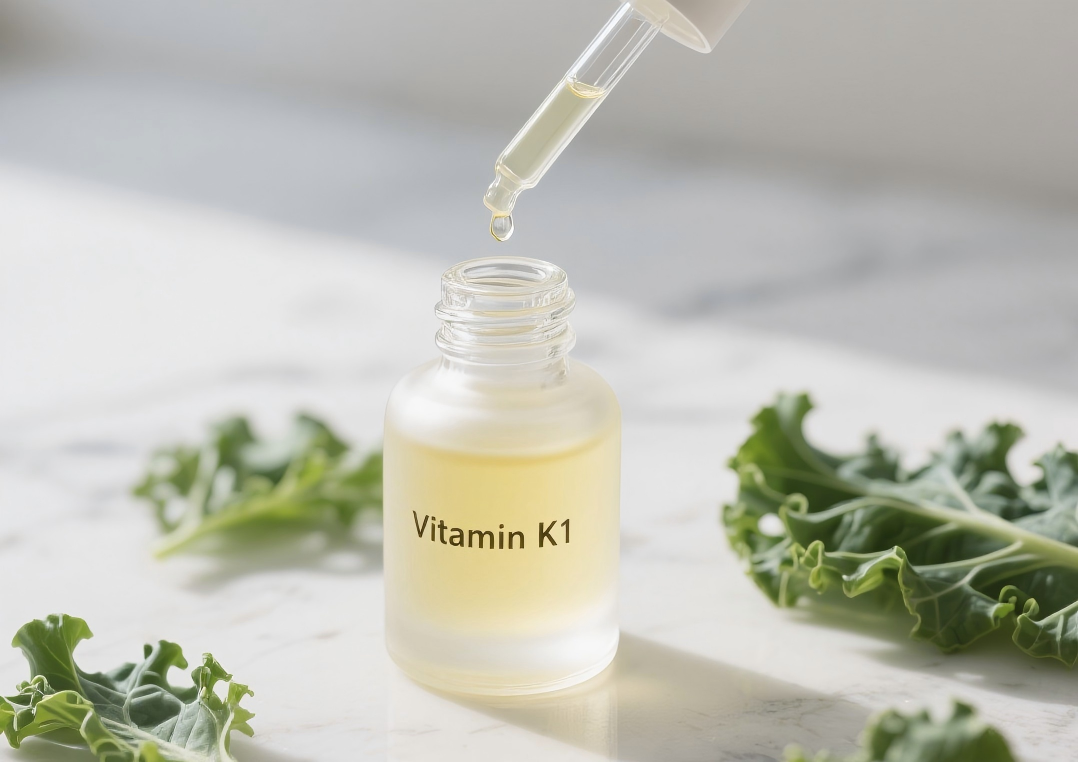
Why Is Vitamin K1 Suitable for Skincare Products?
From an ingredient perspective, Vitamin K1 has three major "skincare advantages":
- Fat-Soluble & Permeable: As a fat-soluble component, Vitamin K1 integrates well into the oil-based matrices of skincare products. When applied to the skin, it can penetrate the stratum corneum and reach the deeper layers of the epidermis (water-soluble ingredients often remain on the skin surface).
- Gentle & Low-Irritation: Unlike "potent active ingredients" such as retinol or AHAs, Vitamin K1 works through a milder mechanism. Evaluated by the Safety and Technical Standards for Cosmetics, it is suitable for sensitive skin at normal concentrations (0.05%-0.5%).
- Multi-Effect Synergy: It can work independently or be paired with ingredients like Vitamin C and niacinamide to amplify skincare effects—this is why it is favored by high-end skincare brands.
Four Core Skincare Benefits of Vitamin K1 & Their Mechanisms
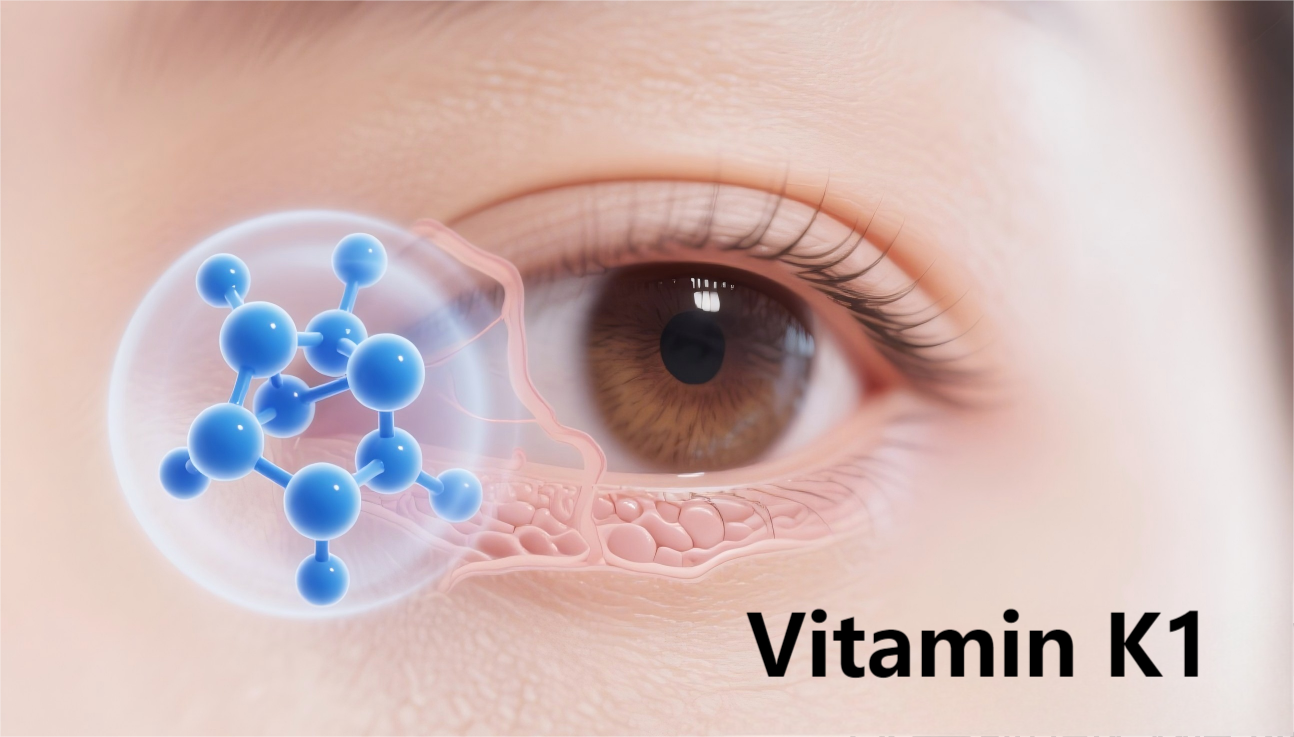
(1) Dark Circle Reduction: Targeting "Vascular Dark Circles"
- Inhibiting Blood Vessel Dilation: The under-eye skin is thin, making subcutaneous capillaries prone to dilation and congestion, leading to a "bluish-black" appearance. A 2021 study in the Journal of Cosmetic Dermatology noted that topically applied Vitamin K1 inhibits "Vascular Endothelial Growth Factor," reducing abnormal capillary dilation and relieving congestion.
- Accelerating Heme Metabolism: When capillaries are slightly damaged, hemoglobin releases "heme," which accumulates under the eyes and causes dullness. Vitamin K1 activates "heme oxygenase" in the skin, promoting the breakdown of heme into harmless bilirubin, which is then excreted via the lymphatic system—thus lightening the "bluish tint";
(2) Anti-Inflammation & Soothing: A "Gentle Savior" for Sensitive Skin & Rosacea
- Blocking the Histamine Pathway: When the skin is exposed to external irritants (e.g., UV rays, pollutants), mast cells release histamine, triggering redness and itching. A study in the International Journal of Cosmetic Science found that Vitamin K1 inhibits "mast cell degranulation," reducing histamine release and relieving immediate redness.
- Inhibiting Inflammatory Factors: Chronic inflammation is associated with inflammatory factors like "TNF-α and IL-6." A 2022 experiment in Skin Pharmacology and Physiology showed that a serum containing 0.3% Vitamin K1 reduced inflammatory factor levels by 40% and redness area by 28% in rosacea patients after 4 weeks of continuous use.
(3) Brightening & Spot Reduction: Aiding in "Post-Inflammatory Hyperpigmentation "
- Blocking the "Inflammation-Pigmentation" Cycle: Inflammation stimulates the activity of melanocytes, leading to pigment accumulation. By reducing inflammation, Vitamin K1 decreases the "overactivation" of melanocytes, preventing pigment production at the source.
- Accelerating Pigment Metabolism: It promotes the "normal turnover" of the skin’s stratum corneum, helping newly formed superficial pigment shed more quickly. A comparative experiment showed that a serum combining 0.2% Vitamin K1 and 5% Vitamin C improved spot reduction efficiency by 15% compared to using Vitamin C alone.
Note: For "deep-seated pigmentation" such as congenital freckles or melasma, Vitamin K1 needs to be paired with ingredients like niacinamide or tranexamic acid—it cannot achieve potent spot reduction on its own.
(4) Anti-Aging & Repair: Protecting the Skin Barrier & Reducing Fine Lines
- Enhancing Stratum Corneum Integrity: "Ceramides" in the stratum corneum are the core of the skin barrier. Vitamin K1 promotes ceramide synthesis in keratinocytes, reducing moisture loss.
- Fighting Free Radical Damage: UV rays and pollution generate "free radicals," which damage skin collagen. Although Vitamin K1 is not a potent antioxidant, it can work synergistically with Vitamin E to "neutralize free radicals," reducing collagen degradation and helping prevent dryness and fine lines.
- Suitable Skin Types: Especially suitable for dry, sensitive, and early aging skin. It can be used as a "basic anti-aging ingredient" paired with retinol or peptides to reduce irritation risks.
How to Choose & Use Vitamin K1 Skincare Products
(1) Check Concentration: Different Effects Require Different Concentrations
- Daily Maintenance (anti-inflammation, moisturization): Choose 0.05%-0.1% concentration—gentle and non-irritating, suitable for sensitive and dry skin.
- Targeted Improvement (dark circle reduction, anti-inflammation): Choose 0.2%-0.3% concentration—with clearer efficacy, suitable for tolerant and combination skin.
- Professional Care (post-procedure, rosacea): Choose 0.3%-0.5% concentration (use under doctor guidance).
(2)Check Complementary Ingredients: Amplify Effects
- Dark Circle Reduction: Vitamin K1 + Caffeine (boosts under-eye circulation) + Hyaluronic Acid (moisturization).
- Anti-Inflammation & Brightening: Vitamin K1 + Vitamin C (brightening) + Panthenol (soothing), suitable for oily, sensitive skin.
- Anti-Aging & Repair: Vitamin K1 + Ceramides (barrier repair) + Vitamin E (antioxidation), suitable for dry and early aging skin.
(3) Usage Notes
- Avoid Mucous Membranes: When applying eye cream, keep it 1mm away from the eyelid margin to prevent eye irritation.
- Pair with Sunscreen: Although Vitamin K1 offers some protection against UV damage, it cannot replace sunscreen. Always apply sunscreen after using it during the day.
- Be Patient for Results: It takes 4-8 weeks to see improvements in dark circles and inflammation, and 8-12 weeks for spot reduction. Do not expect "instant results."
Real-World Examples of Vitamin K1 Skincare Products
| Product Type | Application Scenarios |
| Eye Cream | Vascular dark circles, under-eye fine lines |
| Serum | Sensitive skin soothing, acne mark repair |
| Facial Cream | Dry, sensitive skin barrier repair, daily moisturization |
Conclusion: The "Double Value" of Vitamin K1
- Internal Health: Maintains normal blood clotting function and supports bone health, easily obtainable through leafy greens.
- External Skincare: A "gentle active ingredient" in cosmetics, particularly effective for reducing vascular dark circles and soothing inflammation. It suits most skin types and can synergize with various ingredients to enhance efficacy.
If you struggle with skin issues like "bluish under-eyes" or "sensitive redness," try skincare products containing Vitamin K1. For bone and cardiovascular health, incorporate Vitamin K2 into your diet. Regardless of your choice, always align it with your personal needs. Those with sensitive skin or special health conditions should consult a dermatologist or nutritionist first.
- Name: Yuik
- E-mail: sales02@nahanutri.com
- WhatsApp:+8618066950297