
Why Is Cosmetic Grade Urea Essential For Skincare Formulation Efficacy?
What is Cosmetic Grade Urea, and How Does It Differ From Other Grades?
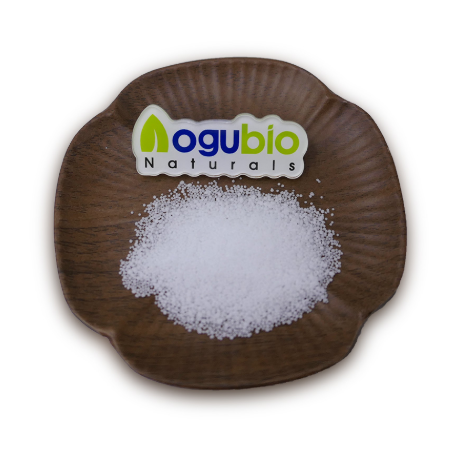
Ureais a naturally occurring compound found in the human skin' s Natural Moisturizing Factor, accounting for roughly 7% of the NMF composition in the stratum corneum—the outermost, protective layer of the skin. This endogenous presence means the skin recognizes and tolerates Urea exceptionally well, reducing the risk of adverse reactions and making it a biocompatible choice for formulation. Cosmetic grade urea is a highly purified, synthetically produced version of this natural compound, free from impurities, heavy metals, microbial contaminants, and residual byproducts that plague industrial or agricultural grade urea. It is manufactured to comply with strict international cosmetic regulations, including EU Cosmetics Regulation (EC) No 1223/2009 and FDA cosmetic ingredient guidelines, with precise pH balancing and particle size optimization for seamless formulation integration.
The purity and consistency of cosmetic grade urea are non-negotiable for formulation efficacy: impure urea can cause skin irritation, destabilize emulsion systems, or reduce the shelf life of finished products. In contrast, pharmaceutical and cosmetic-grade urea (the two highest purity tiers) ensures stable performance, predictable solubility, and consistent skin compatibility—foundational traits for creating reliable, effective skincare products that meet consumer expectations and regulatory requirements.
Core Scientific Benefits of Cosmetic GradeUrea for Skincare Efficacy
1. Powerful Hygroscopic Humectant for Long-Lasting Hydration
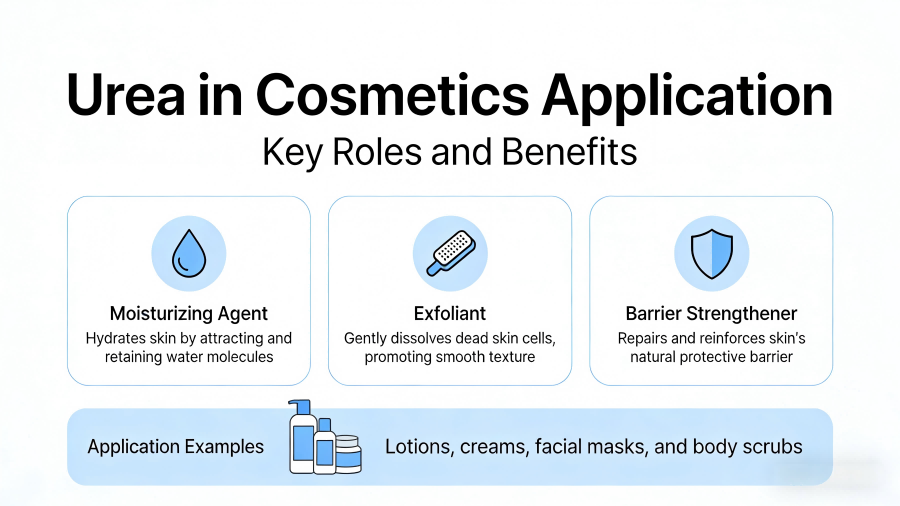
As a hygroscopic molecule, cosmetic grade urea actively attracts and retains water molecules from both the deeper dermal layers and the surrounding air, binding moisture to the stratum corneum to prevent transepidermal water loss (TEWL). Unlike many common humectants (such as glycerin) that provide short-term hydration, urea penetrates the upper skin layers to replenish the skin' s natural NMF, restoring optimal moisture balance for hours after application. A double-blind, randomized, placebo-controlled clinical study published in Surgical & Cosmetic Dermatology (2009) tested 3%, 5%, and 10% cosmetic urea formulations on dry skin, finding that 10% urea delivered sustained hydration for up to 6 hours post-application—significantly longer than lower urea concentrations and glycerin-only control products. The study confirmed that urea' s moisturizing intensity and duration are directly tied to its purified concentration, with cosmetic grade urea ensuring consistent water-binding activity without formulation instability.
2. Skin Barrier Repair & Strengthening
A compromised skin barrier is the root cause of dryness, sensitivity, redness, and reduced efficacy of other skincare actives. Cosmetic grade urea works at the cellular level to repair and reinforce the stratum corneum by upregulating the expression of key barrier proteins: filaggrin, loricrin, and transglutaminase-1. These proteins are critical for forming a tight, protective skin barrier that locks in moisture and blocks environmental irritants, allergens, and pathogens. A comprehensive systematic review published inPMC (PubMed Central) (2025) titled Urea in Dermatology: A Review of its Emollient, Moisturizing, Keratolytic, Skin Barrier Enhancing and Antimicrobial Properties found that topical urea significantly reduces TEWL, a key metric for barrier function, and accelerates barrier repair in damaged skin. The review also cited a randomized controlled trial (RCT) showing 4% cosmetic urea outperformed 20% glycerin in reducing TEWL in patients with atopic dermatitis, proving its superior barrier-repair efficacy.
3. Gentle Keratolytic Action for Smooth, Refined Skin Texture
At cosmetic-safe concentrations (2–20%), urea acts as a gentle keratolytic agent, breaking down the bonds between dead, keratin-rich skin cells on the skin' s surface without causing physical irritation or over-exfoliation. This gentle exfoliation removes dull, flaky skin, unclogs pores, and smooths rough texture—common concerns in dry, mature, or textured skin. Unlike harsh exfoliants (such as high-concentration AHAs or BHAs that can irritate sensitive skin), cosmetic grade urea exfoliates gradually, making it suitable for daily use and long-term skin conditioning.
4. Active Ingredient Penetration Enhancer
One of the most underrated yet critical benefits of cosmetic grade urea is its ability to boost the efficacy of other formulation actives. By softening the stratum corneum and enhancing skin permeability, urea helps other key ingredients—such as vitamins, ceramides, peptides, and antioxidants—penetrate deeper into the skin layers, rather than sitting on the surface and being wiped away or evaporated. This synergistic effect means formulators can use lower concentrations of other actives while achieving better results, reducing the risk of irritation and improving overall product efficiency.
Key Characteristics & Advantages of Cosmetic Grade Urea for Formulators
High Water Solubility & Formulation Compatibility: Cosmetic grade urea dissolves easily in aqueous and emulsion-based formulations, including creams, lotions, serums, gels, and toners. It does not disrupt the stability of oil-water emulsions, making it compatible with nearly all cosmetic bases and other active ingredients, from ceramides and hyaluronic acid to niacinamide and panthenol.
Wide Concentration Versatility: It performs effectively across a broad range of cosmetic concentrations (2–20%), allowing formulators to tailor products for specific skin needs: 2–5% for daily gentle moisturizing and barrier maintenance. 5–10% for intensive dry skin repair and texture refinement. 10–20% for severe dryness, rough patches, and targeted exfoliation. All concentrations remain safe and non-irritating when using purified cosmetic grade urea, per clinical data.
Excellent Safety & Tolerability: Purified cosmetic grade urea is non-comedogenic, non-irritating, and suitable for sensitive skin, atopic-prone skin, and even pediatric and geriatric skin.
Stable & Long-Shelf Life: Cosmetic grade urea is chemically stable under normal formulation and storage conditions, resisting degradation, discoloration, or odor development. It does not react with other formulation ingredients, ensuring finished products maintain consistent efficacy and texture throughout their shelf life.
Regulatory Compliant: Meets global cosmetic safety standards, including EU, FDA, and ISO specifications, with full traceability and purity documentation—critical for international market distribution and regulatory approval.
Widespread Applications of Cosmetic Grade Urea in the Cosmetic Industry
Daily Moisturizers & Emollients: The most common use case, added to face and body lotions, creams, and balms to provide long-lasting hydration and barrier support for normal, dry, and sensitive skin. Formulations with 5–10% urea are particularly popular for daily dry skin prevention and maintenance.
Barrier Repair Products: Included in recovery creams, serums, and treatments for compromised skin (post-procedure, atopic dermatitis, eczema, or environmental damage) to speed up barrier healing and reduce TEWL. Dermatological studies highlight urea as a first-line ingredient for non-prescription barrier repair.
Exfoliating & Smoothing Treatments: Used in gentle exfoliants, texture-refining serums, and callus softeners (for hands and feet) to remove dead skin without irritation, ideal for users who cannot tolerate harsh chemical exfoliants.
Anti-Aging Skincare: Added to anti-aging creams and serums to boost hydration, smooth fine lines caused by dryness, and enhance the penetration of anti-aging actives like retinol and peptides, while reducing potential irritation from these ingredients.
Therapeutic Skincare for Specific Conditions: Formulated into specialized products for xerosis, ichthyosis, keratosis pilaris, and scalp dryness, providing clinically proven relief for dry, scaly skin conditions. A 2025 study in Dove Medical Press confirmed urea-based formulations significantly reduce desquamation and dryness in hand eczema and seborrheic dermatitis.
Specialized Body & Foot Care: Used in foot creams, hand creams, and body butters to target extremely dry, rough, or cracked skin on the hands, heels, elbows, and knees, with 10–20% concentrations delivering intensive repair.
Conclusion: Cosmetic Grade Urea as a Cornerstone of Effective Skincare Formulations
In an industry where consumers prioritize proven efficacy over marketing hype, cosmetic grade urea stands apart as a scientifically validated, versatile, and gentle ingredient that is essential for maximizing skincare formulation performance. Its unique combination of humectant, barrier-repair, keratolytic, and penetration-enhancing properties addresses multiple skin concerns simultaneously, while its high purity, formulation compatibility, and regulatory compliance make it a practical choice for formulators worldwide. Backed by rigorous clinical research and decades of dermatological use, it is not a temporary trend but a foundational component of modern, effective skincare.
Name: Yuki
E-mail: sales02@nahanutri.com
WhatsApp:+8618066950297